Tuesday, June 21, 2016

NPG May 21, 2015

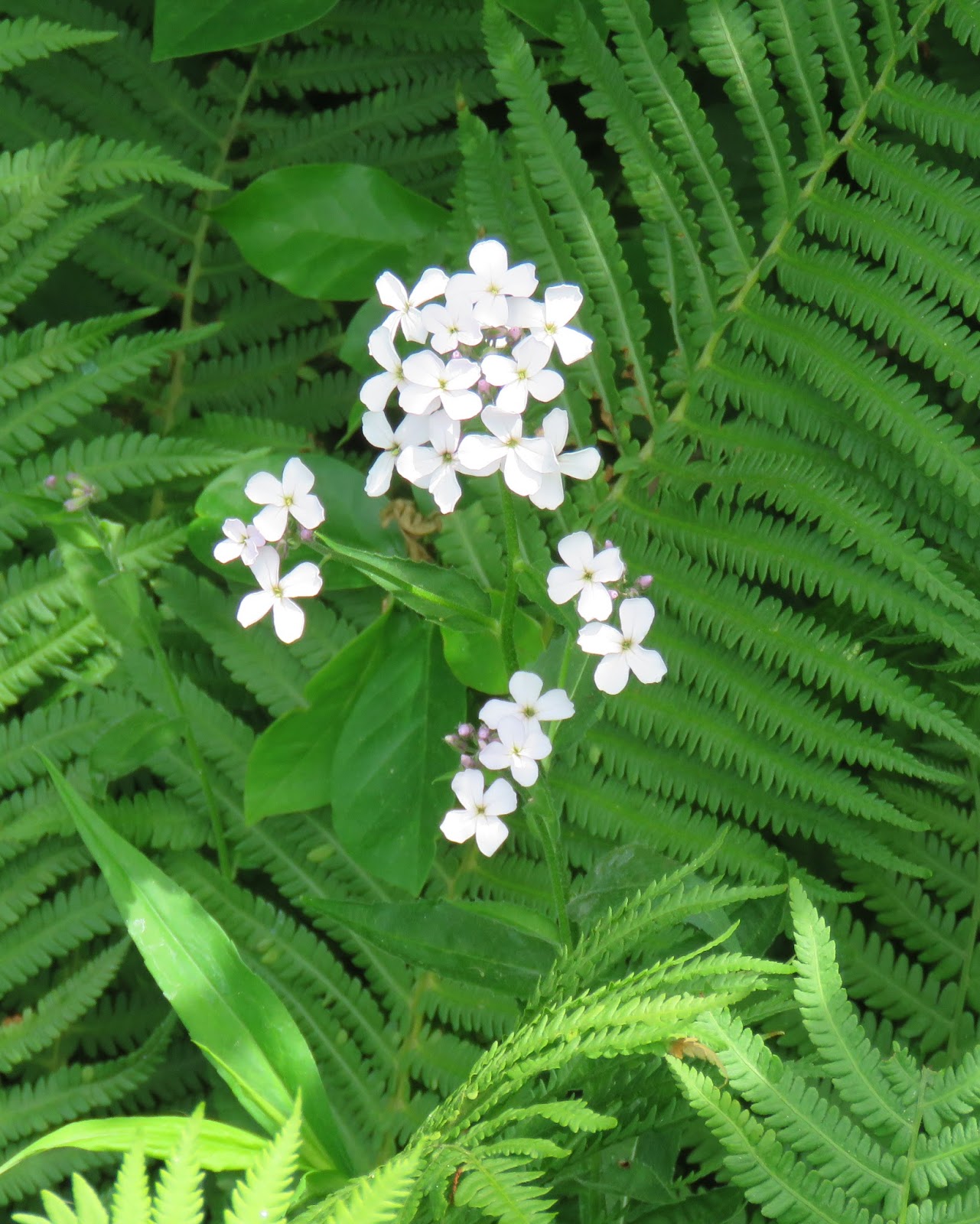
Cloudy and cool, hooray. Mostly gardeners on the tour and they stayed the one hour and forty minute tour. About 40 blooming plants plus pulled out Garlic Mustard and Mugwort. Notice the Celandine Poppy look-alike, Greater Celandine, which is an invasive alien that they should remove.  Looking down close to the raised path (where the Spring Beauty, Jeffersonia, Trout Lily was) you can show people what Poison Ivy looks like.

These are listed (more or less) as you go counterclockwise from the NPG entrance. If it would help to list the “stories” about these plants, let me know if I should include some with the listings.

Wild Bleeding Heart
Wild Geranium
Golden Alexanders
Wild Yellow indigo Baptisia
Wild Blue Indigo
Columbine
Bowmans Root Gillenia trifoliatus
Fairywand Chamaelirium luteum
Narrow leaf blue-eyed grass  Close to bloom
Blueberry
Bluestar
Shooting Star
Foamflower
False Solomon’s Seal
Yellow Trillium
Lady Slipper
American Umbrellaleaf 
Bluets
Trillium (nodding, grandiflora, hybrid double)
Larkspur
Solomon’s Seal
Rue Anemone
Wild Ginger
Trillium sessile (red)
Phlox
Jacob’s Ladder
Cinnamon Fern
Royal Fern
Azaleas (pinkster or ‘marydel’)
Virginia Bluebells
Pitcher Plants yellow and red
Rhododendron
Common Rush Juncus effusus 
Wild Quinine
Spiderwort (If you have your magnifying glass, get the visitors to look at the central part of the flower)
Cow Vetch
Prairie Smoke
Red Clover
Dwarf Beardtongue 
Winter King (tree)
Queen Columbine 
Blue Iris

Thursday, June 16, 2016

NPG June 16, 2016

Rainy, humid, high 60s.  New way to get to NYBG today because of traffic problems, limited time to check out blooming plants before the tour starts. I am scheduled for another tour next week but not in the future. Many plants from last week finished blooming this week and new ones to challenge us.

New this week along the approach to the entrance is False Sunflower Heliopsis helianthoides. Hope for a photo of the leaves and flower to follow.  They do!


Milkweed Asclepias syriaca and A. purpurascens in full bloom, Harebell Campanula americana and Bush's Poppy Mallow Callirhoe bushii (photo).


The Spigelia marilandica is gorgeous. Remind people to use the Latin name if ordering; Pinkroot won't do it. Picking off the dead blooms will keep the flowers coming.

Along the Boardwalk across from the water, Black Cohosh Actea racemosa and False Goatsbeard Astilbe biternata are blooming, as is Glade Mallow Napaea dioica. They are all written up in my NPG "book." Honey Suckle is plentiful across from much Pickerelweed Pontederia cordata in the water (photo).   


The pink buttons among the Pitcher Plants are Barbara's Buttons Marshallia grandiflora (and not Swamp Pink Helonias bullata  which is slated to come up in the same area). (photo) Also among the Pitcher Plants are both lavender and white Rose Pogonia or Snakemouth Pogonia ophioglossoides. (photo)


 The 5-petaled 1/4" yellow flower on a skinny stem with a few opposite leaves that you would only notice if you looking very closely among the Pitcher Plants is---I dunno.

I am going to ask tonight at my online lesson how you put captions on the photos. We may stump them.

Monday, June 13, 2016

Native Plant Garden: June 18, 2015


From my archives:  Native Plant Garden, New York Botanical Garden
Marcia Strean
June 18, 2015


67 degrees cloudy, drizzly, no tours signs because of an error on the day of the week. So no visitors except a docent and her husband, knowledgeable and interested in all the identifications and stories.

Smashing colors. My pick for today’s most gorgeous: Spigelia marilandica, in masses that made it so striking. 

2015 photo by Joel Nevis y Flores, for public use only with acknowledgement
Spigelia marilandica (Indian Pink) with red lady fern
Newly blooming this week: Poppy Mallow, Goatsbeard Aruncus dioicus, Magnolia Calyculus florida, Milkweed, Inkberry Ilex glabra, Winterberry, Thimbleweed Anemone virginiana, White Beardtongue Penstemon tubiflorus, Elderberry, Stiff Tickseed, Hydrangeas, Wild Quinine, Canada Anemone, Azalea, Flleabane, Barbara’s buttons (pink, by water), Columbine, Wild Bleeding Heart, Iris, Juncus effusus, Plymouth Rose Gentian, Pitcher Plants, last of Golden Alexanders, Black-eyed Susan, Yellow Coneflower, Butterfly Weed, Spiderwort, Cactus, Lance-leaved Coreopsis, Dwarf Beardtongue, Fire Pink Silene virginica, Queen Columbine, Hairy Chickweed, Celandine Poppy, Cohosh, Pickerelweed, Bluestar, Wild Ginger, Narrowleaf Blue- eyed Grass, Phlox

2015 photo by Joel Nevis y Flores, for public use only with acknowledgement
Anemone virginiana (Thimbleweed)
Notice the pods on Shoofly Baptisia alba, the unripe large blueberries, the apples on Mayapple.

Gardener planting more Cardinal Flowers since they did not propagate.

Many chipmunks scampering and rabbits chewing.


Friday, June 10, 2016

NPG June 9, 2016

NYBG Native Plant Garden: June 9, 2016

Hey! You go to Blogger, click on the pencil icon and voila, you can write this blog.  I am even going to try to go to "Link" and put photos somewhere on here.

Nature sure moves fast.  Missed last week, and numerous flowers are gone, and new ones to note.

A relief that today the temperature actually enabled the wearing of the sweatshirt that NYBG so kindly provided. In the high 60's, and very windy.  Lucky my hat was from my sailing days and had ties both under the chin and in back. You didn't know I spent 20 years sailing my boat on Long Island Sound, teaching sailing, selling study guides to help get a Coast Guard license and am a licensed Coast Guard Captain?

Coming from the Reflecting Pool, the overwhelming numbers are of phlox and beardtongue Penstemon digitalis. There is also Meadow Rue and soon-to-be-blue fat green berries on blueberry bushes Vaccinium. Less of Wild Indigo/Shoofly Baptisia alba, Iris though it is profuse along the water, Wild Quinine though that also is more abundant by the Split Rock. The bell-like purple flowers, not showing last time, are Harebell Campanula americana. 


Do take the Gravel-Lok to the right even though most of the flowering is gone from under the trees, and see the native Columbine Aqualegia canadense and a fresh crop of Pinkroot Spigelia marilandica with a new sign. The Oakleaf Hydrangea is blooming now and the flowers will get much larger.

Turning left at Mickel's fern, looking down right past the Sweet Gum Tree, the delicate white flowers of Partrideberry are showing, but watch out, a 4 inch piece of Poison Ivy right in the midst of it.

Partridgeberry and Poison Ivy

I've been waiting for the Inkberry Ilex glabra to bloom, and you would want to have your magnifying glass ready for this. The 1/4" flower has stamens with maroon tips and each petal has the same. (Not as prominent as the Inkberry at the entrance to the Old NPG and I need to stop living in the past.) You know the small black berries were used by Native Americans for writing,thus the common name.

Rhododendrons up the earth path and, to my great pleasure, searching under the Wild Ginger
Asarum canadense there were still those amazing flowers to see.  The visitors have never seen these flowers and are always excited by the view.  Going up the path does not show you many flowers you can't see elsewhere, but Green'n Gold were still blooming there.

This year the Garden replaced Foamflower Tiarella cordifolia and they are scattered if not as abundant. Solomon's Seal of all species are showing: white flowers under the stems, Plume Solomon Seal showing berries drying, but delightful False Starry Solomon's Seal has what I call "marbles," which are shiny, tan with black markings.

New this week is Skullcap Scutellaria serrata. Careful: may look just like another lavender flower.

Down the steps to the Education Pavilion, see the Eastern Beebalm Monarda blooming.

Worked on the beginning of June 9, 2016 blog, with help, nobody able to get captions except on the first photo, and why the unfinished blog got published, also unknown.  I was thrilled to be able to write, though, and spent a long time on the continued report for that week, did not press "save" and the whole thing disappeared.  Forcing myself to try to re-do the charming job that got lost, probably show my impatient, irritable self, but here goes.

On the first part of June 9, 2016, starting after Skullcap and before the out-of-place photo of Beebalm Monarda, Kentucky Lady Slipper, Bluestar, a little Golden Alexanders.  Back on the boardwalk toward the entrance, among the Pitcher Plants a 1/4" irregular blue flower about 15 inches high, a few opposite leaves, a plant I could not identify, and while waiting for help from Curator Michael Hagen, I am thinking it is Blue Toadflax Linariacanadensis, but wait for confirmation.

 In the water Pickerelweed's Pondederia cordata blue flowers and many Iris. On your left are Fleabane, Royal Fern, a favorite fern, (is that because I have grandiose royalty fantasies or because I know it well from being in my own yard?). The white flower hard to see from the boardwalk I think is Canada Anemone. Moving toward the ramp, past the now empty nest in the Shadbush, Kalmia latifolia  Mountain Laurel.  Notice the huge leaves of the American Umbrella Plant, and on the right Bowman/s Root/Indian Physic/Ipecac Gillenia trifoliata with its delicate white flowers, used to induce vomiting.

As you turn left, under the Sourwood Tree Celandine Poppy is still to be seen in bloom.  Most visitors I find call it Coral Bells, but the Heuchera has always been known to me as Alumroot. The shrubby blue-flowered blooming plant that has spread a lot is Scorpionweed Phacelia bipinnatifida which seems to have shown up on its own, and you old timers will remember that it was blooming along the wall just where you came in the Rock Garden/ Native Plant Garden entrance, yes, of the Old NPG. Is it worth getting closer to the Education Building to peer at the Hairy Chickweed by the rocks, which reminds me that the Old NPG had many species of Chickweed. It has been a valuable source of Vitamin C for both animals and humans, blooming even under the snow.

Still traveling counter-clockwise, the marvelous Silverbell Trees Halesia, have now traded their white flowers for Chinese lanterns, so this tree is one to keep your eye on many times during seasonal tours. Here is where I would mention Eastern Beebalm Monarda  down the steps to the Education Building, and the photo on the previous 6/9/16 blog shows it.

On the path toward the Split Rock, the eye-catching bright red is (not Cardinal Flower) but Fire Pink Silene virginica, not a long-lived plant. The whopping purple bells are Beardtongue, but greatly outnumbered by their native species white Beardtongue. Of the five stamens, one is fuzzy, thus "bearded," and nature sends a different insect to each species so they do not hybridize.

Whew, this just disappeared from the desktop again, but I was able to get it back. Marcia, save, save, save.  Milkweeds Asclepias syriaca, more needed to help save our Monarch butterflies, are blooming in several places in several colors.  I think I do not dare to try to put in the photo here, but maybe I will give it a shot at the end. (I did try but no luck.)

Pear Cactus Opuntia is in bloom with striking yellow flowers. Also yellow though a different shade, is Lance-leaved Coreopsis Coreopsis lanceolata with its fringed tip petals and which can be kept blooming if you clip off the dying flowers. Various shades of Coneflowers, always recognizable by their bristly protruding centers and the less common color, orange, is starting now: Butterfly Weed Asclepius tuberosa.  The Spiderwort Tradescantia named after John Tradescant is in both purple and magenta, and makes a contribution to humans by telling if there is radiation.

Behind the Split Rock is the first Bush's Poppy Mallow Callirhoe bushii. The long-stamened St. Johnswort Hypericum was hung over pictures to ward off evil and used in herbal medicine to combat depression. Roses, more Pinkroot Spigelia marilandica we are lucky to have, Stonecrop, and large-flowered, non-native but beautiful Foxglove  Digitalis.


Sunday, June 5, 2016

Native Plant Garden: June 11, 2015


From my archives:  Native Plant Garden, New York Botanical Garden

Marcia Strean
June 11, 2015


Blooming new this week: Spigelia marilandica Pink Root/Wormgrass. Native Americans used it to expel tapeworms and they taught their technique to colonists. The difference between poison and medicine is often a matter of how much used, and how carefully. Spigelia is a case in point.

Does well in gardens and the flowering season can be prolonged by removing the flowers as they wither.
2015 photo by Joel Nevis y Flores, for public use only with acknowledgement
Spigelia marilandica


Inkberry Ilex glabra in bloom today; easy to miss the 1/4 inch flowers. Berries will follow, used by Native Americans for ink. 

Plymouth Rose Gentian Sabatia kennedyana The folklore says that the Pilgrims of 1620 named the plant after the Sabbath, the holy day on which they first saw the flower.

2015 photo by Joel Nevis y Flores, for public use only with acknowledgement
Sabatia kennedyana

Phlox, numerous species of Beardtongue, Wild Bleeding Heart, Red and White Clover (non- native to be removed), Baptisia, Wild Quinine, Bluestar, Columbine, Fleabane, Mountain Laurel, Meadow Rue, Solomon’s Seal, Wild Ginger flowers still there, one Lady’s Slipper, Bowman’s Root, Iris, Common Rush, Pitcher Plants, Ladies’ Tresses, Pickerel Weed in the water, Iris, Common Rush, Golden Alexanders under the River Birch (but elsewhere the remains were being cut back), Milkweed, Butterfly Weed Asclepius tuberosa, Spiderwort, Lanceleaved Coreopsis, Black-eyed Susan, Yellow Coneflower, Poppy, Mallow, Deptford Pink, Coneflower, Cactus, Beebalm, Fire Pink Silene virginica, Dog Hobble, Queen Columbine, Celandine Poppy, Alumroot Heuchera, Sorrel, Magnolia, Dogwood, Narrow-leaved Blue-eyed Grass.


See the apples on Mayapple. Stop to hear the frog croaking.


The red-berried shrub along the approach is Amelanchier Shadbush/Serviceberry.


People ask about Joe Pye Weed which is not blooming yet. By 1893 he legend had become that Joe Pye was the name of an Indian who cured typhus fever in New England by means of this plant (Dana). 

next post

first post in blog


Saturday, June 4, 2016

Native Plant Garden: June 2, 2016


NPG Curator Michael Hagen class June 2, 2016

Katherine kindly sent this list of blooming plants that were examined in a class led by Michael Hagen on the Thursday that I did not come to the Native Plant Garden. There must have been over 30 other blooming plants which are not listed.

Comparing with the last list of blooming plants, note that Harebell, Indian Strawberry, Cinquefoil and St. John’s Wort are newly in bloom.

Dicentra eximia - Papaveraceae - Wild Bleeding Heart
Zizia aurea - Apiaceae - Golden Alexanders
Campanula rotundifolia* -  Campanulaceae - Harebell

Amsonia tabernaemontana -  Apocynaceae - Bluestar
Baptisia alba - Fabaceae - White Wild Indigo
Aquilegia canadensis  - Ranunculaceae - Columbine
Diphylleia cymosa  - Berberidaceae - American Umbrella
Asarum canadense  - Aristolochiaceae - Wild Ginger
Gillenia trifoliata  - Rosaceae - Indian Physic
Duchesnea indica*  - Rosaceae - Indian Strawberry
Geranium maculatum -  Geraniaceae - Wild Geranium
Tradescantia ohiensis  - Commelinaceae - Spiderwort
Penstemon digitalis  - Plantaginaceae - Beardtongue
Penstemon pallidus  - Plantaginaceae - Beardtongue
Potentilla recta*  - Rosaceae - Cinquefoil
Hypericum perforatum* - Hypericaceae - St. John’s Wort

Friday, June 3, 2016

Native Plant Garden: June 4, 2015


From my archives:  Native Plant Garden, New York Botanical Garden

Marcia Strean
June 4, 2015


Approaching the NPG, along the edge, pink flower, five petals with opposite entire leaves, about one foot tall, newly opened, are Phlox. (I learned to differentiate at a distance this similar looking flower from Dame’s Rocket because Phlox has five petals, Dame’s Rocket four but with very different leaves.)

What a difference a week makes! NPG gardener Meg says, “It’s a new season.” Much greener look, fewer blooming plants.

Dwarf Beardtongue and numerous species of Beardtongue, Wild Bleeding Heart (plus a white variety), Wild Quinine, Iris, Bluestar, Columbine, very little of Shooting Star, Fleabane, Partridgeberry, Twinleaf, Kentucky Lady’s Slipper,Robin’s Fleabane, Pitcher Plants, Ladies Tresses.
In the Meadow: Wild Bergamot/Beebalm, Bowman’s Root/Indian Physic/Ipecac, Lance-leaved Coreopsis, Spiderwort.

Foxglove (by the steps down to the Education Building), Hairy Chickweed (against the Rocks by the Queen Columbine), Celandine Poppy, Deptford Pink (by the rocks past the Split Rock).

Wild Blue (and Yellow) Indigo (Baptisia alba and B. australis), also called “Shoofly” because of its loose limbs; farmers would break off a stem, and use it to shoo the flies from the horses pulling their carts.

Wild Ginger: (take advantage of pointing out Wild Ginger while the unusual three-petalled, brown flowers are still blooming under the leaves).

Lots of Red Clover, which is not native, but if you are looking for four leaf clovers you are more likely to find them in the Red Clover than the White. 


2016 photo by Joel Nevis y Flores, for public use only with acknowledgement
Phlox


Monday, May 30, 2016

Native Plant Garden, NYBG - May 29, 2016

New York Botanical Garden's Native Plant Garden on May 29, 2016
guest post by Joel Nevis y Flores


I did not give a tour but was at the NYBG with friends enjoying their rose garden among other things. Grass pollens had arrived and I briefly lost my voice to allergy coughing. The temperature reached 93F and the weather was beautifully sunny despite the forecasts. The robin's nest in the shadbush from last week appeared empty and we noticed an immature robin not far away by the native border.


2016 photo by Joel Nevis y Flores, for public use only with acknowledgement
Plenty of visitors at the NPG entrance
2016 photo by Joel Nevis y Flores, for public use only with acknowledgement
Fledgling American robin
Most of the spring ephemerals have finished their floral display; consequently visitors sped through the woodland garden rather quickly, often failing to note such late bloomers as Kentucky lady slipper. On the other hand the sarracenias looking very colorful in the wetland garden; it is would be smart to find that sign about carnivorous plants from last year (or was it the previous year) to turn a pretty flower experience into a learning experience.

Amsonia
Anemonella thalictroides
Aquilegia canadensis 
Asarum canadense 
Baptisia australis
Baptisia carolina “Moonlight”
Baptisia alba
Calycanthus floridus 
Carex muskingumensis 
Carex plantaginea 
Cerastium arvense
Chionanthus virginicus 
Clematis ochroleuca  (flower and seed)
Comptonia peregrina
Coreopsis
Cornus sericea  in the rear of the native border
Cypripedium kentuckiense 
2016 photo by Joel Nevis y Flores, for public use only with acknowledgement
Cypripedium kentuckiense
Dicentra eximia
Diphylleia cymosa
Erigeron pulchellus 
Geranium maculatum 
Geum trifolium  Prairie Smoke seeds
Gillenia trifoliata 
Heuchera longiflora 
Hybrid Pitcher Plant Sarracenia x areolata 
2016 photo by Joel Nevis y Flores, for public use only with acknowledgement
Hybrid Pitcher Plant Sarracenia x areolata
Iris cristata
Iris prismatica 
Juncus effusus 
Kalmia angustifolia
Leucothoe axillaris
Magnolia virginiana 
Maianthemum  (Canada Mayflower)
Meehania cordata  maybe
2016 photo by Joel Nevis y Flores, for public use only with acknowledgement
Is this Meehania cordata?

Monarda bradburiana 
Orontium aquaticum - flower spikes are slipping below the waterline so I assume they are nearing the end of the blooming phase
Osmorhiza claytonii
Osmunda regalis
Osmundastrum cinnamomeum 
Parthenium integrifolium
Penstemon digitalis 
Penstemon hirsitus in both dwarf and regular forms
Phacelia bipinnatifolia 
Polemonium 
Polemonium reptans “Touch of Class”
Polygonatum 
Primula meadia - a few still around
Rhododendon "Choptank rose"
Rhododendron “Catawbiense Album” 
2016 photo by Joel Nevis y Flores, for public use only with acknowledgement
Rhododendron “Catawbiense Album”

Rhododentron "Marydel"
Sarracenia alata 
Sarracenia flava 
Sarracenia leucophylla 
Sedum nevii
Sisyrinchium angustifolium 
Smilacina racemosa 
Stylophorum diphyllum 
Tiarella
Tradescantia - flowers were closed in the full sunlight as they like to do; you need to see them in the morning or on a cloudy day
Trillium recurvatum
Trillium flexipes
Trillium luteum 
Vaccinium are forming loads of fruit that the birds will enjoy
Vicia
2016 photo by Joel Nevis y Flores, for public use only with acknowledgement
Vicia (Cow vetch)

Viola walteri
Zizia

A few mysteries to me. The first may be cardamine -- the flowers look like it and the leaves were weakly toothed.
2016 photo by Joel Nevis y Flores, for public use only with acknowledgement
May be cardamine

2016 photo by Joel Nevis y Flores, for public use only with acknowledgement
in the meadow

2016 photo by Joel Nevis y Flores, for public use only with acknowledgement
in the wet woodland not far from the boardwalk

The non-native, invasive Chelidonium majus (Celandine) is going to seed over by the river birch screen. And the Rumex acetosa (red sorrel), though no longer in bloom, were thriving.


next post

first post in blog


Saturday, May 28, 2016

Native Plant Garden: May 28, 2015

From my archives:  Native Plant Garden, New York Botanical Garden
Marcia Strean
May 28, 2015

Though a hot and humid, day, cloudy turning to sun, a good group of visitors on my tour. Most of the plants in bloom are the same as the previous week, which are listed, half a dozen removed because they finished blooming, but newly blooming this week are Spiranthes (Ladies’ Tresses) by the Pitcher Plants, Field Hawkweed (Hieracium), Beardtongues (Penstemon digitalis etc.), Mountain Laurel (Kalmia latifolia), Iris (numerous species), Canada Anemone (Anemone canadensis), a few Dutchman’s Breeches, Sheep Laurel (Kalmia augustifolia), Robin’s Plantain (Erigeron pulchellus) which I forgot to list last week, Philadelphia Fleabane (Erigeron philadelphicus), Lanceleaf Coreopsis, Wild Bleeding Heart, Wild Geranium, Golden Alexanders, Wild Yellow indigo Baptisia, Wild Blue Indigo, Columbine, Bowmans Root (Gillenia trifoliatus), Narrowleaf Blue-eyed Grass, Blueberry (a few flowers), Bluestar, Shooting Star, Foamflower, False Solomon’s Seal, Yellow Trillium (Trillium luteum), Lady Slipper, American Umbrellaleaf (limited flowers), Trillium (hybrid double), Solomon’s Seal, Rue Anemone, Wild Ginger, Phlox, Cinnamon Fern, Royal Fern, Azaleas, Virginia Bluebells (one flower—“beggars can’t be choosers”), Pitcher Plants yellow and red, Rhododendron, Common Rush Juncus effusus, Leatherleaf, Wild Quinine, Spiderwort, Cow Vetch, Prairie Smoke, Red Clover, Dwarf Beardtongue, and Queen Columbine.

A few docents indicated an interest in the “stories.”


Wild Bleeding Heart: the honeybee’s proboscis is 6 mm, too short to reach the nectar; requires the bumblebee with an 8 millimeter proboscis to fertilize the plant.

photo by Joel Nevis y Flores, 2016, for public use only with acknowledgement
Wild Bleeding Heart (Dicentra eximia)
Solomon’s Seal so-called because the root is in the shape of the seal Solomon used to wax seal his missives. False Solomon’s Seal called false because it did not have the expected medicinal properties.


Beardtongue has five stamens, one of which is fuzzy or “bearded,” so it gets its name from that. More interesting, the many species of Beardtongue are each visited by different insects and do not hybridize. 

photo by Joel Nevis y Flores, 2015, for public use only with acknowledgement
Beardtongue Penstemon (Penstemon digitalis)

photo by Joel Nevis y Flores, 2015, for public use only with acknowledgement
Poison ivy (Toxicodendron radicans) right next to boardwalk